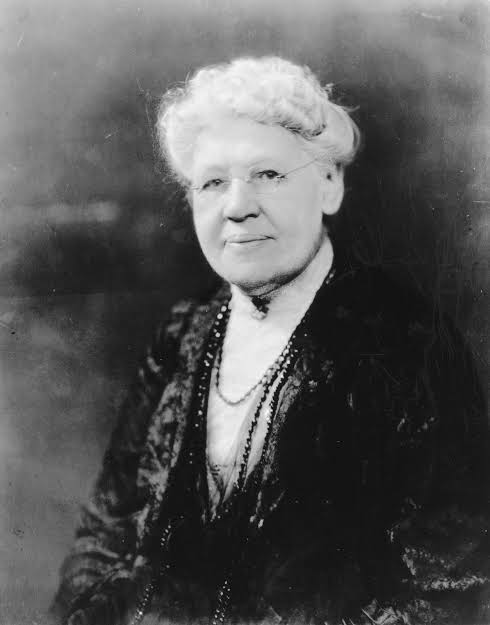
 Dr. Eliza Maria Mosher (October 2, 1846 – October 16, 1928) was a pioneering physician, educator, and prison reformer whose career broke numerous barriers for women in
medicine.
Dr. Eliza Maria Mosher (October 2, 1846 – October 16, 1928) was a pioneering physician, educator, and prison reformer whose career broke numerous barriers for women in
medicine.Partner Lucy Mabel Hall-Brown
Queer Places:
University of Michigan, 500 S State St, Ann Arbor, MI 48109, United States
90 Market St, Poughkeepsie, NY 12601, USA
Vassar College (Seven Sisters), 124 Raymond Ave, Poughkeepsie, NY 12604
181 Joralemon St, Brooklyn, NY 11201, USA
Oak Glen Cemetery, Cherry Ave, Aurora, NY 13026, USA
Dr. Eliza Maria Mosher (October 2, 1846 – October 16, 1928) was a pioneering physician, educator, and prison reformer whose career broke numerous barriers for women in
medicine.
Born to a Quaker family in Cayuga County, New York, the daughter of Augustus Mosher and Maria Sutton, she was a direct descendant of both Francis Cooke and Richard Warren who came over on the Mayflower, and of Hugh Mosher who came a few years later. Mosher was drawn to medical science despite opposition from her amily and society's deep-seated prejudice against female doctors.
She began her formal study at the New England Hospital for Women and Children in Boston before enrolling at the University of Michigan Medical School, graduating in 1875. She later pursued post-graduate medical studies in London and Paris to further refine her clinical knowledge.
Mosher built an extensive, multifaceted medical career spanning clinical practice, institutional administration, hygiene education, and medical publishing:
In 1875, when entering private practice with Dr. Elizabeth Gerow, she resided and worked at 90 Market Street, Poughkeepsie, NY.
Appointed as the resident physician at the newly established Reformatory Prison for Women in Sherborn, Massachusetts, Mosher later accepted the position of superintendent. She overhauled institutional hygiene, introduced educational programs, and prioritized rehabilitative care over punitive measures.
Between 1883 and 1887, Mosher and her partner Dr. Lucy M. Hall alternated semesters serving as resident physicians and associate professors of physiology and hygiene at Vassar College. During her private practice alongside Dr. Lucy M. Hall, she lived and operated her clinic at 181 Joralemon Street in Brooklyn.
In 1896, the University of Michigan appointed her as its first Dean of Women and full Professor of Hygiene in the Department of Literature, Science, and the Arts. She designed physical education programs tailored specifically for female students. Built in 1930 on the University of Michigan campus, the Mosher-Jordan residence hall was named in honor of Eliza Maria Mosher and Myra B. Jordan (the university's first two Deans of Women).
Mosher was an early innovator in posture and ergonomics, developing specialized desk seating for school children and streetcar seating for the Brooklyn Rapid Transit Company to prevent skeletal strain.
She maintained a busy private practice in Brooklyn, New York, for decades, served as president of the American Medical Women’s Association (AMWA), and served as the senior editor of the Medical Woman's Journal.
As documented in Lillian Faderman’s historical study To Believe in Women: What Lesbians Have Done for America, Dr. Mosher belonged to a network of late 19th- and early 20th-century female physicians who navigated the hostile professional landscape by forming lifelong domestic and professional partnerships with other women.
"It would be no exaggeration to say that a preponderance of women who made their mark in medicine during the early years lived in intimate relationships that we would consider lesbian." — Lillian Faderman.
Mosher’s central life partner was Dr. Lucy M. Hall (later Dr. Lucy Hall-Brown). The two met early in their medical careers, co-founded private practices together in both Poughkeepsie and Brooklyn, and shared living quarters and institutional work:
When Mosher served as superintendent at the Sherborn Reformatory, she appointed Dr. Lucy Hall as the resident physician. The two women shared both their medical practice and their home for years, supporting each other through the demands of establishing credibility in a male-dominated profession.
These long-term domestic arrangements—often referred to historically as "Boston marriages"—were vital to early women doctors. Similar relationships provided mutual financial stability, shared domestic duties, and essential emotional backing.
References:
 To Believe In Women: What Lesbians Have Done For America - A History – A Compelling Landmark Account of 19th and 20th Century Rights by Lillian Faderman |
Other references:
Support this project
This website is a passion project researched, developed, and funded entirely by me. If you find the content valuable and would like to help support the ongoing research and hosting costs, any contribution is deeply appreciated.
Thank you for keeping this independent resource alive!
My books on Amazon: Elisa Rolle's books